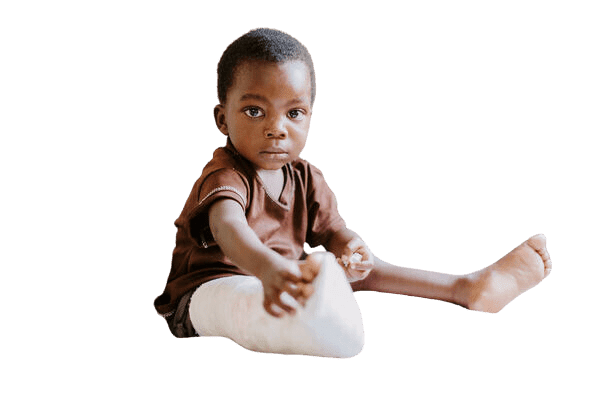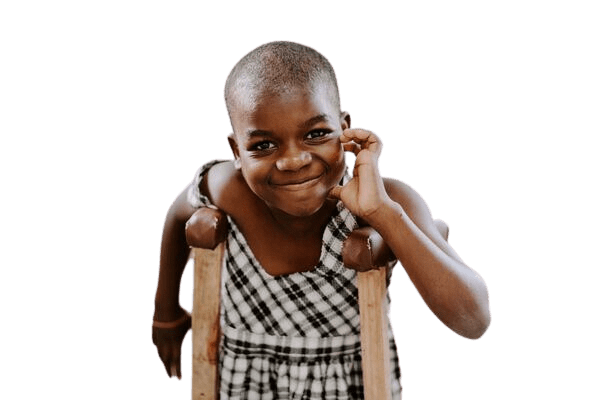
Imagine living your childhood in constant pain every time they walk. Never being able to wear shoes. Being teased by other children because their feet look different. Watching others run and play while they sit on the sidelines.
For many children born with clubfoot in Malawi, this is the reality they live every day. Yet it doesn’t have to be.
Clubfoot is a condition in which one or both feet are twisted inward and downward at birth. Without treatment, children can experience difficulty walking, pain, and long-term disability. However, when identified and treated early, clubfoot can be corrected, giving children the opportunity to walk, run, go to school, and live full, active lives.
Raising Awareness in Zomba
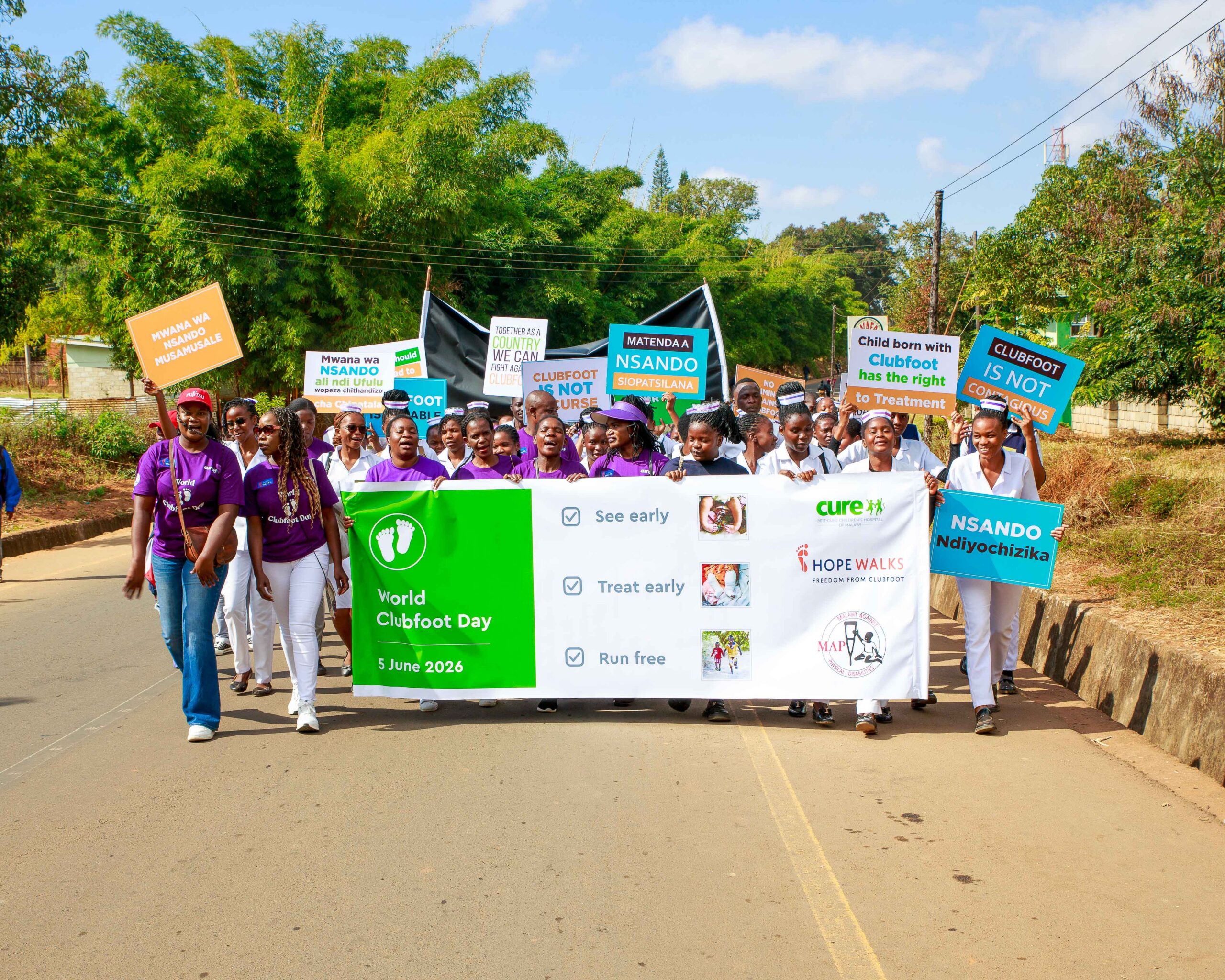
That message was at the heart of this year’s World Clubfoot Day commemorations at the Gymkhana Club in Zomba District under the theme, “See Early. Treat Early. Run Free.”
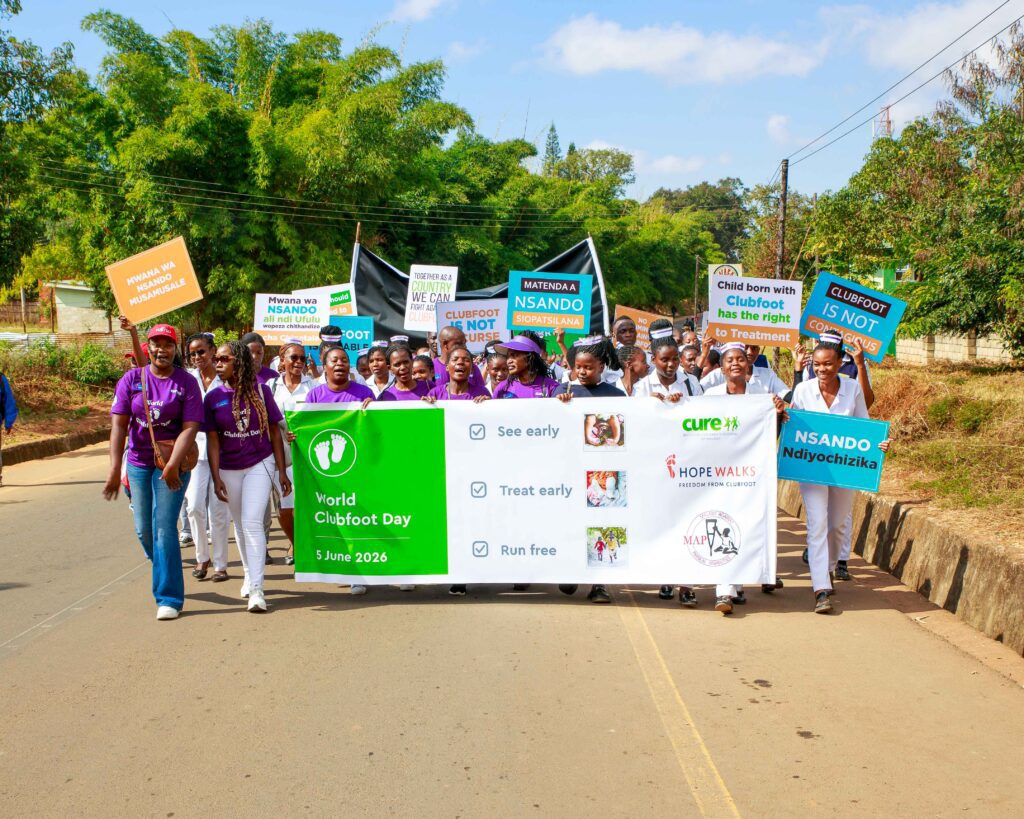
CURE Malawi, in partnership with Malawi Against Physical Disabilities (MAP) and Hope Walks, brought together Officials from the Zomba District Health Office, students from the University of Malawi, Malawi College of Health Sciences-Zomba Campus, St. Luke’s College of Nursing, Passion Centre for Children, and caregivers of former clubfoot patients to raise awareness about clubfoot and encourage families to seek treatment as soon as the condition is identified.
Before proceeding to the venue, stakeholders marched from Likangala Secondary School through Zomba City’s Central Business District, carrying placards that challenged common myths about clubfoot.
Early Treatment Changes Lives
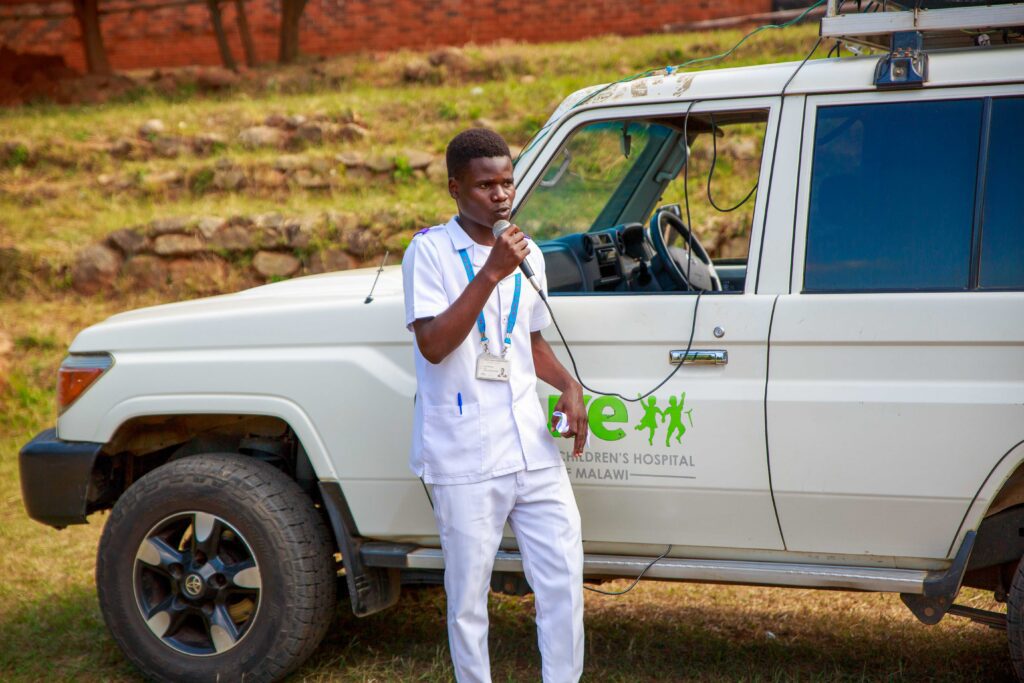
Felix Makwinja, a second-year nursing and midwifery student at Malawi College of Health Sciences, made a presentation on clubfoot, covering its causes, types, and treatment options.
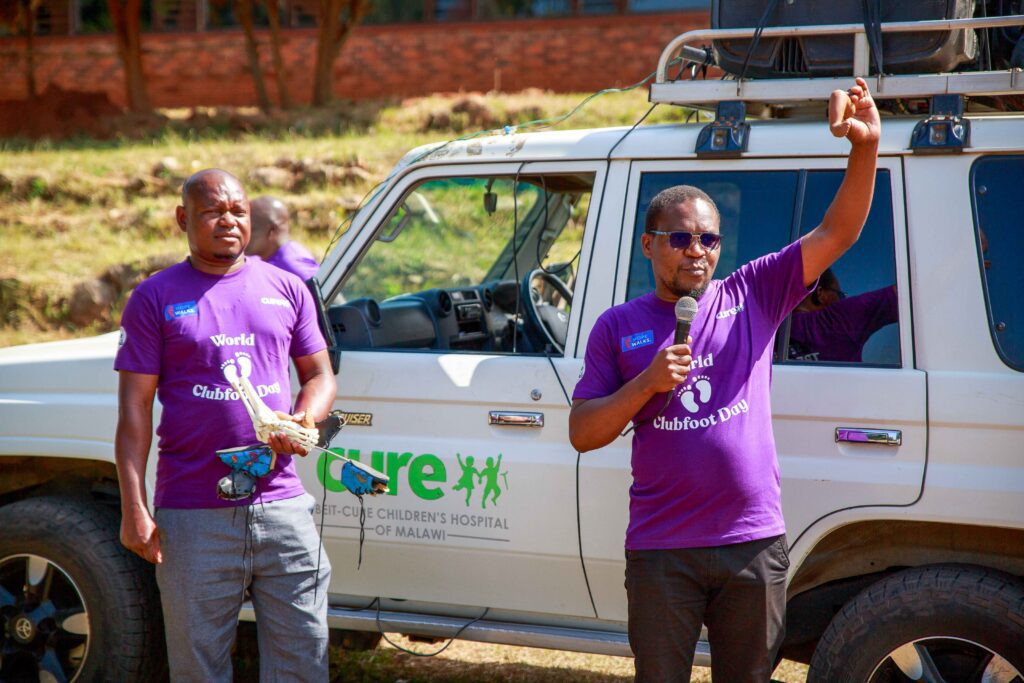
Reinforcing the day’s message on early treatment, officials from the Zomba District Health Office’s Physiotherapy Department explained how clubfoot is corrected using the Ponseti method. The treatment involves a series of weekly casts over four to eight weeks to gradually move the foot into the correct position. Most children also undergo a minor procedure to lengthen the Achilles tendon. After treatment, the child wears a foot abduction brace for 23 hours a day for the first three months, and then during sleep until age five, to keep their foot in the correct position.
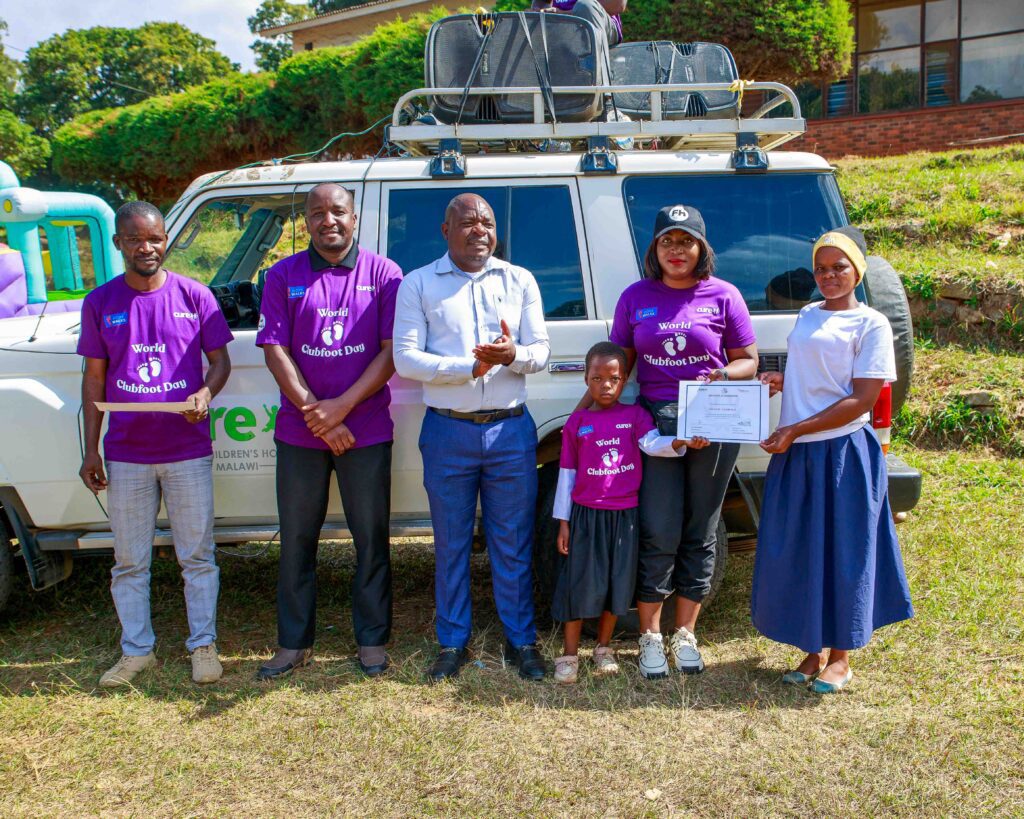
Agness M’bwana from Seven Miles in Zomba shared how her six-year-old daughter, Shanil, was treated for clubfoot. Shanil started treatment as an infant after she was diagnosed at the MAP clinic at Zomba Central Hospital. After a series of casts, she was referred to Beit CURE Children’s Hospital of Malawi for a tenotomy to lengthen the Achilles tendon. She later returned to the MAP clinic at Zomba Central Hospital to continue treatment with a foot abduction brace.
Today, Shanil walks normally, and M’bwana encouraged parents to seek treatment early if they notice signs of clubfoot in their children.
A Call for Early Treatment
Speaking during the commemorations, CURE Malawi Director of Finance Getrude Mkandawire thanked partners for their collaboration in organising the event and urged parents to seek medical attention as soon as they notice signs of clubfoot.
MAP Chief Executive Officer Mike Nyirenda said many children in rural communities continue to miss out on treatment because parents are unaware that clubfoot can be corrected. He noted that this lack of information contributes to some children growing into adulthood with untreated clubfoot.
Nyirenda also said the country lacks enough health workers trained to provide clubfoot treatment. “At the moment, we do not have enough health workers trained to treat clubfoot. I urge medical training institutions to include clubfoot management in their curricula so that more children can access treatment,” he said.
Through partnerships with organisations such as MAP and Hope Walks, CURE Malawi continues to support efforts to raise awareness of clubfoot and expand access to treatment. The hospital encourages parents and caregivers to seek medical attention as soon as they notice signs of clubfoot, because early treatment can prevent lifelong disability.
Contact Us
If you know a child with clubfoot or another treatable disability, contact CURE Malawi. Early treatment gives children the best chance of recovery.
Whether you want to find out how to become a patient, refer a child, or partner with us, our team is ready to assist. Please get in touch with us for more information.